Slat damage
A forklift or a trailer catches the curtain and deforms slats. Individual slats can often be replaced rather than the whole curtain, depending on where the damage sits.
Installed and repaired, with the common slats, bottom bars and barrel components on the truck.
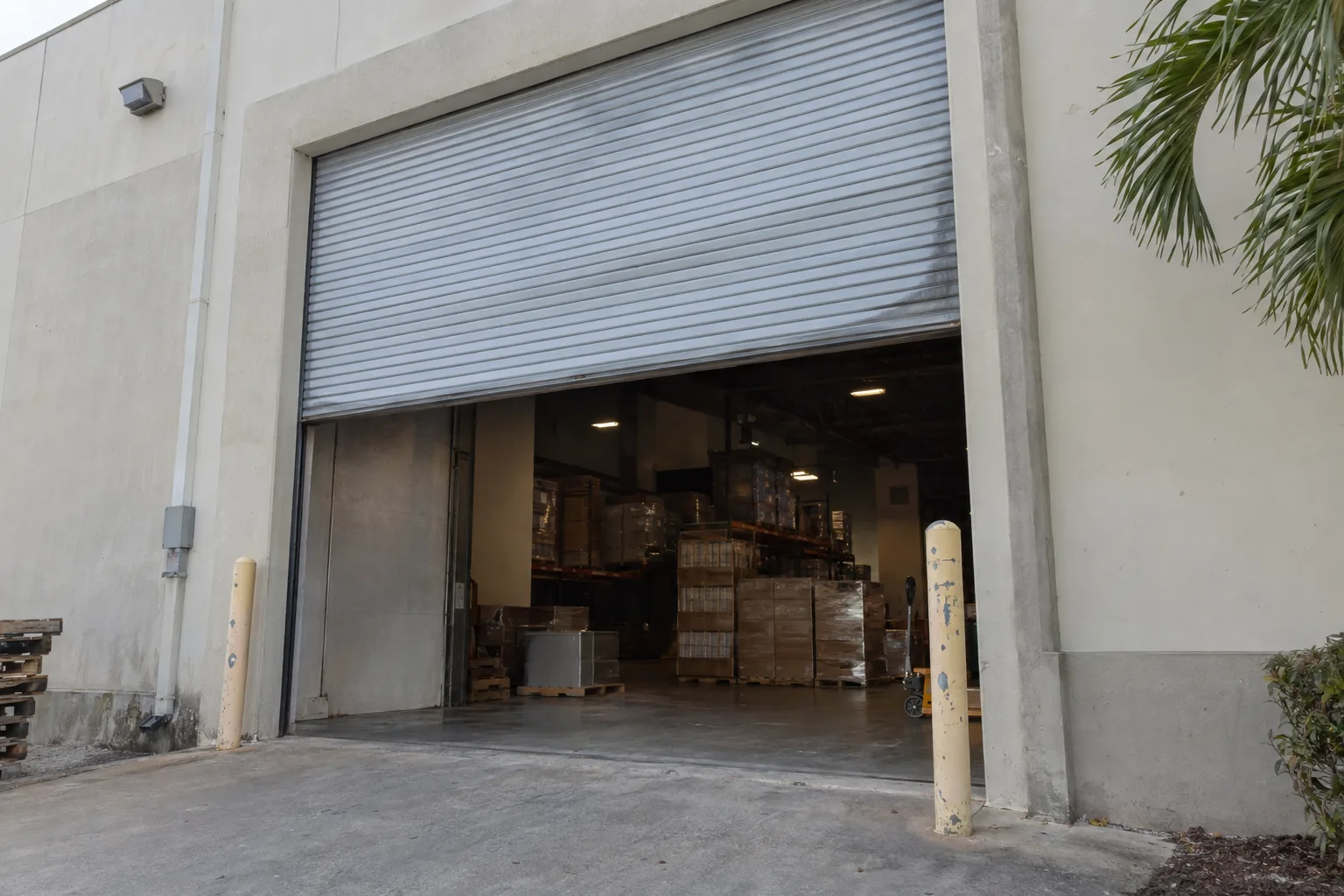
A rolling steel door is interlocking steel slats that coil onto a barrel above the opening rather than folding into horizontal sections. There are no hinges between panels to loosen and no joints to bow or crack under forklift traffic.
A coiling door is the tighter-profile variant of the same idea, for openings where headroom above the frame is limited. Same curtain and barrel mechanics, smaller coil diameter.
The failures are different too. Instead of hinges and panel joints you get slat damage from impact, guides packed with debris or knocked out of line, counterbalance tension inside the barrel, and bottom bar and astragal wear. This runs under commercial garage door repair.
Different mechanism, different list, and impact is usually somewhere in it.
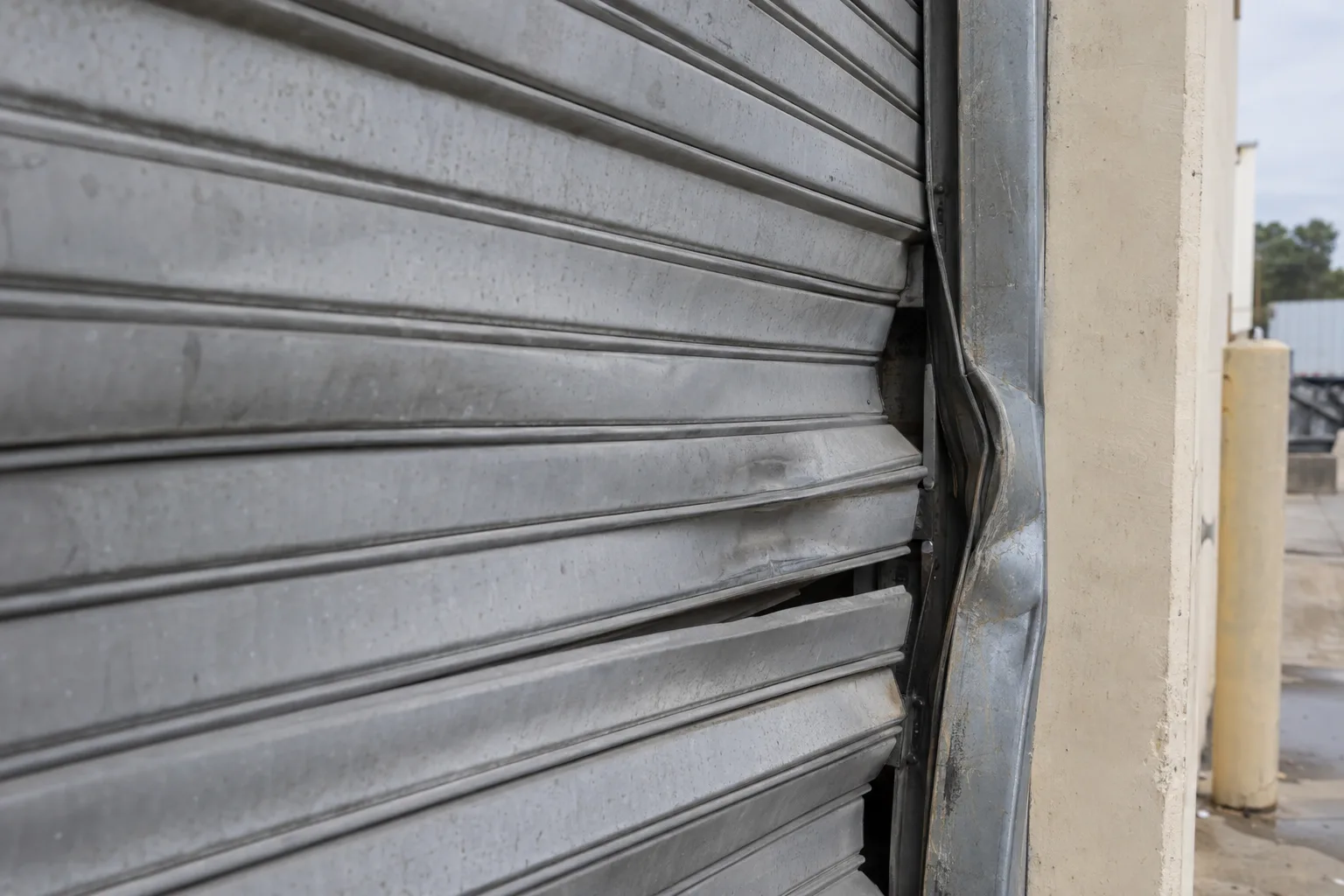
A forklift or a trailer catches the curtain and deforms slats. Individual slats can often be replaced rather than the whole curtain, depending on where the damage sits.
The curtain runs in side guides. Debris packed into them, or a guide knocked by traffic, binds the curtain and can jam it part way.
Spring tension inside the barrel carries the curtain weight. Out of tension it runs heavy, drifts, or refuses to hold.
The bar takes the floor contact and the impacts, and the astragal is what seals against the slab. Both wear on a door cycling all day.
Hoist, trolley and jackshaft operators, plus the safety edge and photo eyes. On a heavy curtain the entrapment protection is not optional, and product standards come from DASMA, the industry standards body.
Rolling steel assemblies are specified by cycle rating, and commercial ratings start well above what a residential door is built for and scale up from there with gauge and slat profile.
That number is the difference between a door serviced on a schedule and a door that surprises you. If a curtain assembly keeps needing attention, the honest answer is often that the rating was set below the traffic rather than that the last repair was wrong.
The same logic applies to the operator. A duty rating chosen for occasional use on a door that runs every few minutes fails on its own timetable, no matter how good the door is.
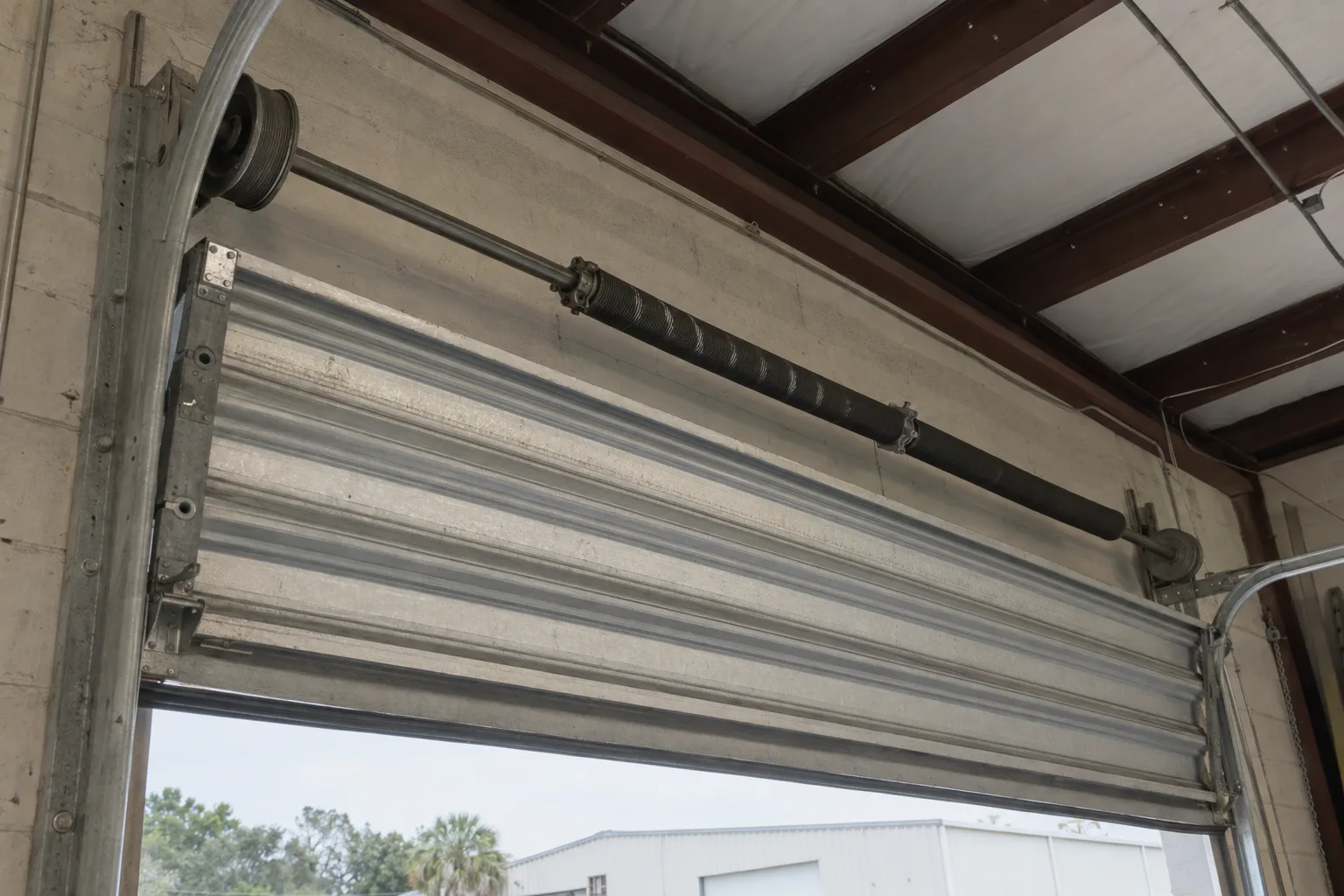
The curtain is the visible part and rarely the whole story.
Fire-rated rolling doors carry drop-test and inspection requirements of their own. If yours is a fire door, say so when you call, because the scope is different.
Call (689) 407-8963Windermere, FL 34786
Primary service zone, Orange County. Not sure whether you are inside the radius? Call (689) 407-8963 and ask.
Often yes, depending on where in the curtain it sits and how far the deformation runs. It is one of the practical advantages of a rolling door over a sectional.
Usually the guides. Debris packed into them or a guide knocked out of line binds the curtain, and forcing it with the operator bends slats on top of the original problem.
Tell us when you call. Fire doors have drop testing and documentation requirements that a standard rolling door does not, and the scope of the visit is different.
Rolling steel, in most cases. No panel joints means nothing to loosen or buckle under forklift traffic, though insulation options are more limited.
Slats, bottom bars, barrel components and drive hardware for the common configurations ride on the truck, so most repairs are the first visit.
Commercial dispatch runs 24/7. A bay that cannot be secured is treated as an emergency.