Sectional overhead doors
Panels, tracks, springs, cables and rollers on the same principles as a residential door, at a duty cycle that wears them far faster.
Overhead doors, operators, hoist systems and access control. Nights, weekends and holidays.
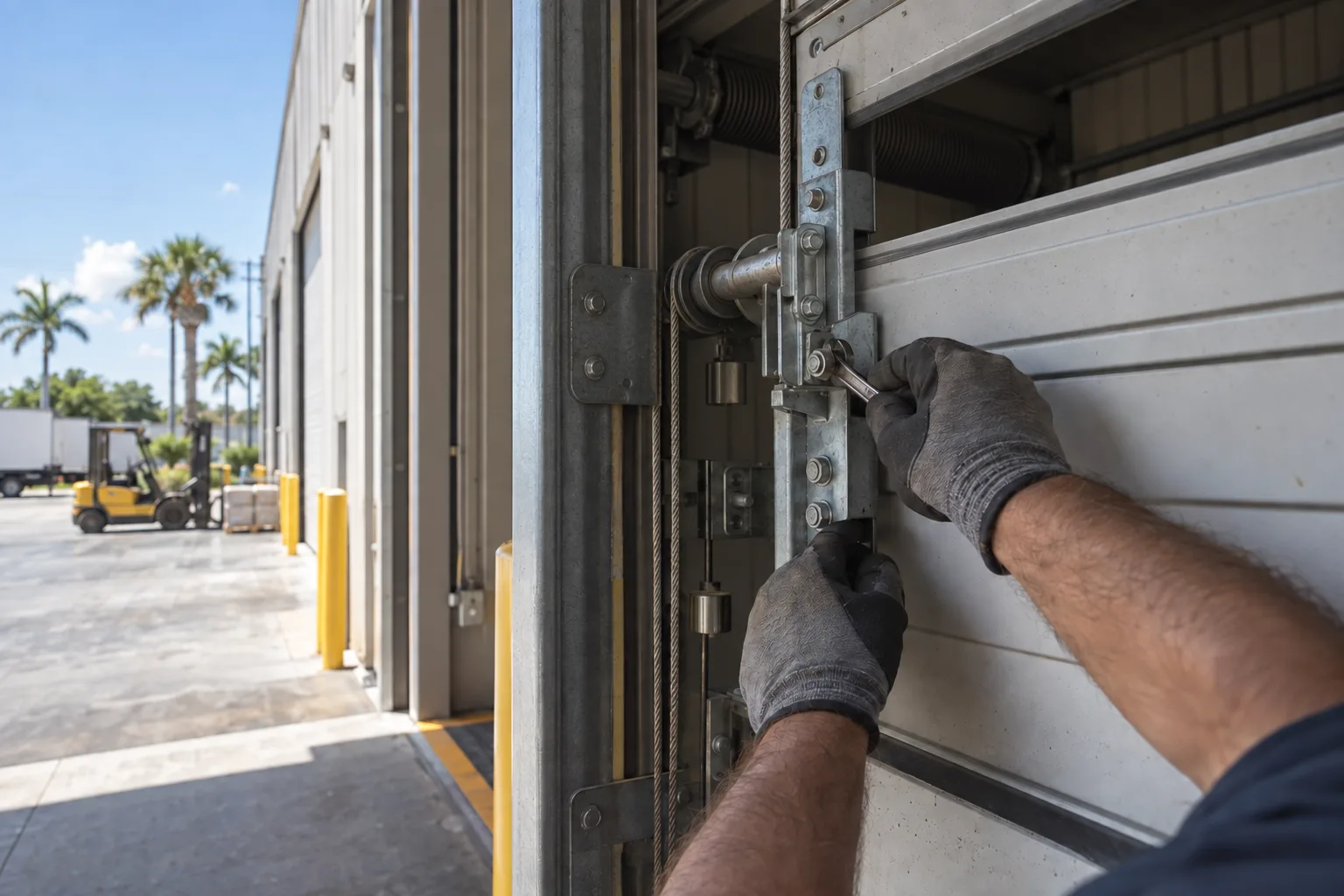
A home door runs a handful of cycles a day. A commercial door can run that many in an hour, and hardware specified for the first will not survive the second. That is the reason commercial-grade parts ride on the truck rather than residential components sized to fit.
The scope is wider too: sectional overhead doors, rolling steel and coiling doors, hoist and trolley operator systems, and the access control that decides who opens them.
For a business, downtime is the actual cost. A repair that waits for the next business day is lost operating hours, and in warm months a stuck door on a temperature-controlled space is a cooling problem within the hour.
Under one license, which matters when a site has several door types.
Panels, tracks, springs, cables and rollers on the same principles as a residential door, at a duty cycle that wears them far faster.
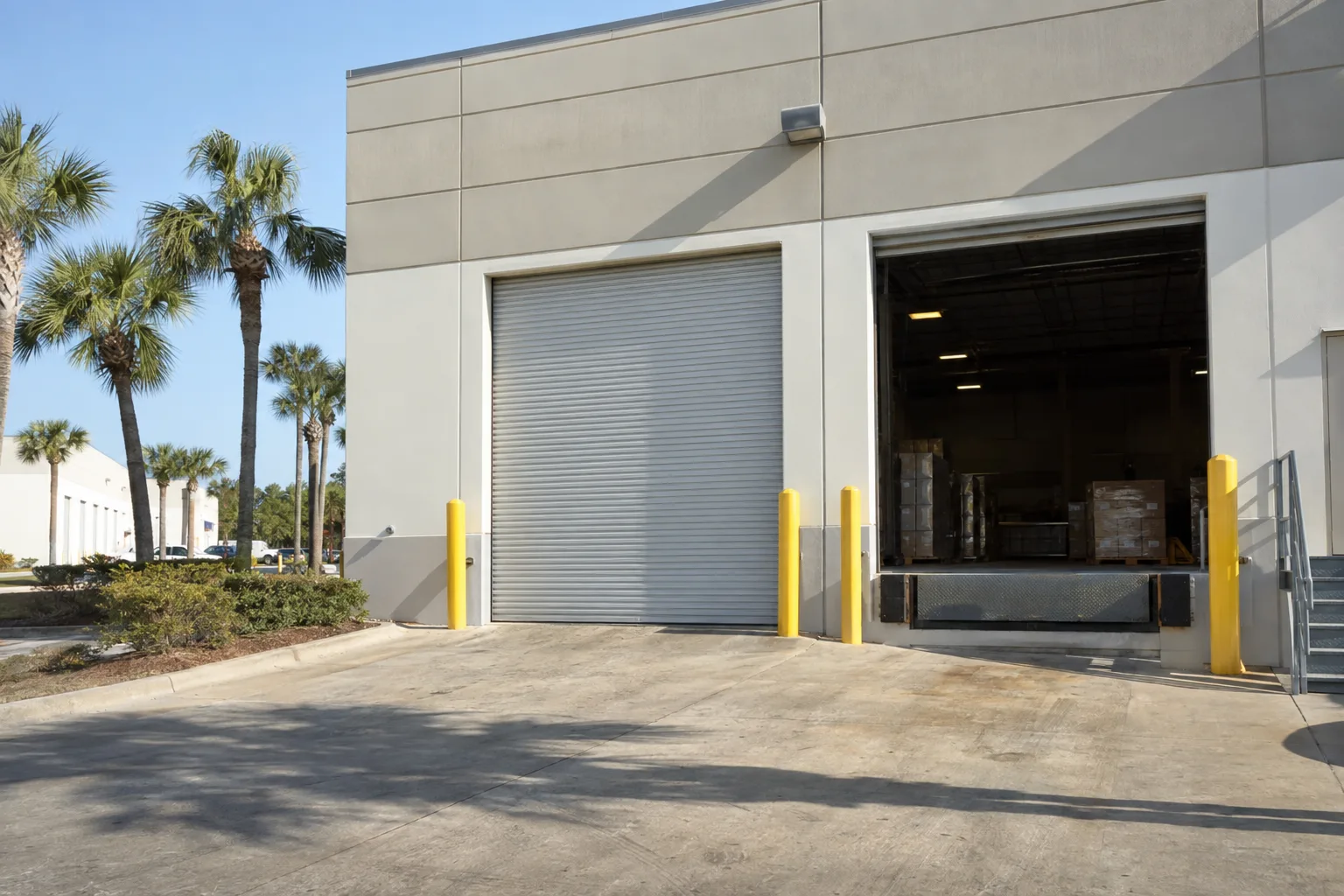
Curtain, barrel, guides and counterbalance. A different mechanism from a sectional door and a different set of failures.
Rolling steelHoist, trolley and jackshaft commercial operators, plus the controls and safety devices around them.
Commercial doors fail on a predictable curve because the cycle count is predictable. Contracts are available for sites that would rather budget for service than for downtime.
Commercial openings carry requirements that residential ones do not, around door ratings, fire doors and the safety devices on powered operators. The Florida Building Code sets the baseline the county enforces, and Orange County lists garage doors as permit work for the work that needs one.
Entrapment protection matters more on a commercial door because the doors are heavier and the traffic is constant. Product standards come from DASMA, the industry standards body, and a door running with a bypassed safety device is a liability sitting in your building.
Where we find one, we say so in writing rather than quietly. You can verify it with the Florida DBPR for the license behind the work.
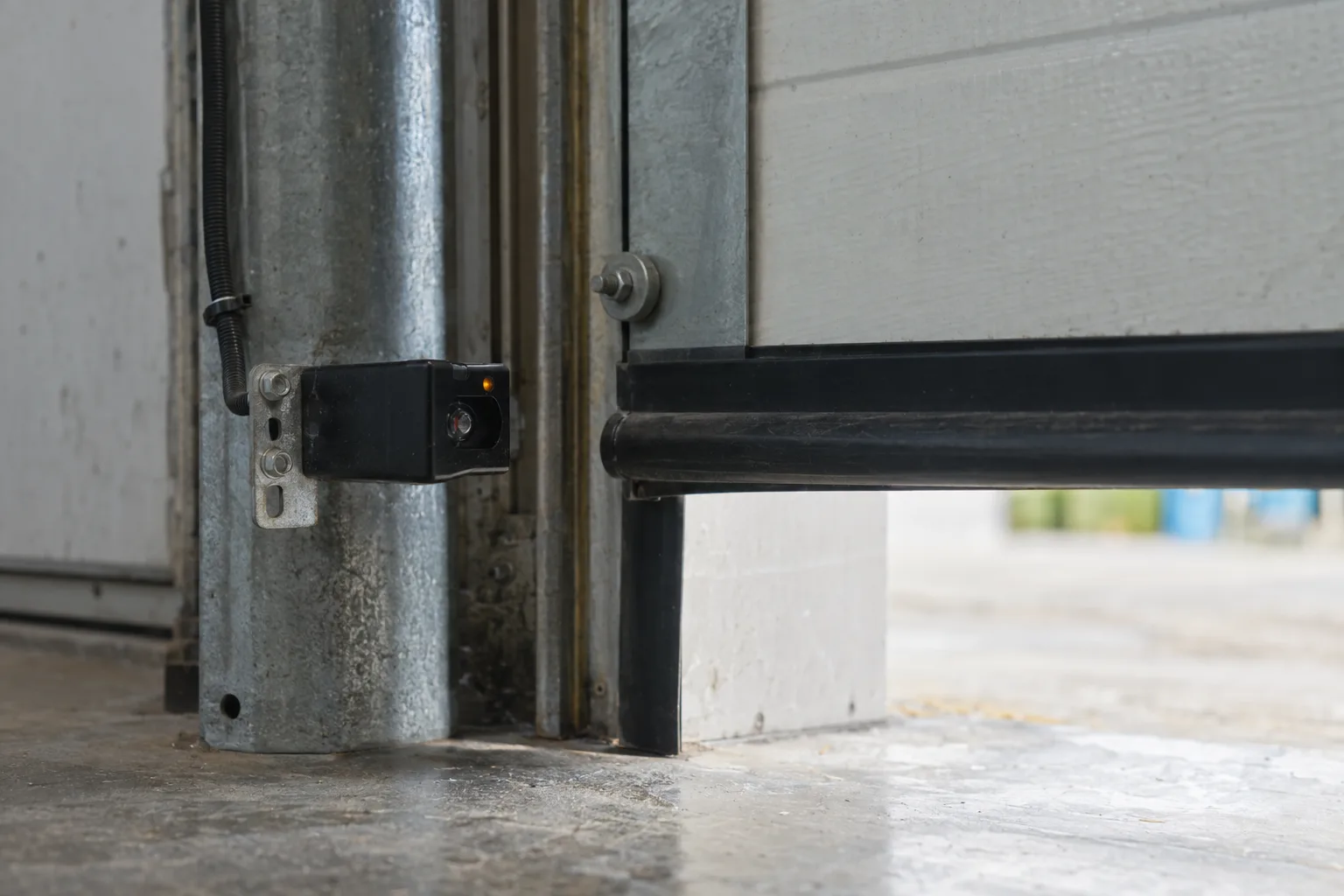
The same discipline as a residential call, at a scale where failure costs more.
If the same door keeps failing, the answer is usually the duty rating rather than the last part. We will tell you when the hardware is simply undersized for the traffic.
Call (689) 407-8963Windermere, FL 34786
Primary service zone, Orange County. Not sure whether you are inside the radius? Call (689) 407-8963 and ask.
Yes. Commercial dispatch runs 24/7 including weekends and holidays, because a door down outside business hours is exactly when it costs the most.
Commercial-grade components ride on the truck rather than residential parts sized to fit. That distinction is the difference between a repair that lasts and one that repeats.
Yes, along with sectional overhead doors, hoist and trolley operators and loading dock equipment.
Yes. For a door running high cycle counts, scheduled service is cheaper than reactive calls, and it makes the failures predictable instead of surprising.
No. We will report it and quote the correction. A powered commercial door running without its entrapment protection is a liability we are not going to sign off on.
That is the normal request. Most non-emergency commercial work gets scheduled outside trading hours.