Painting and finishing with a system that holds up to Florida sun, not just the day it is applied.
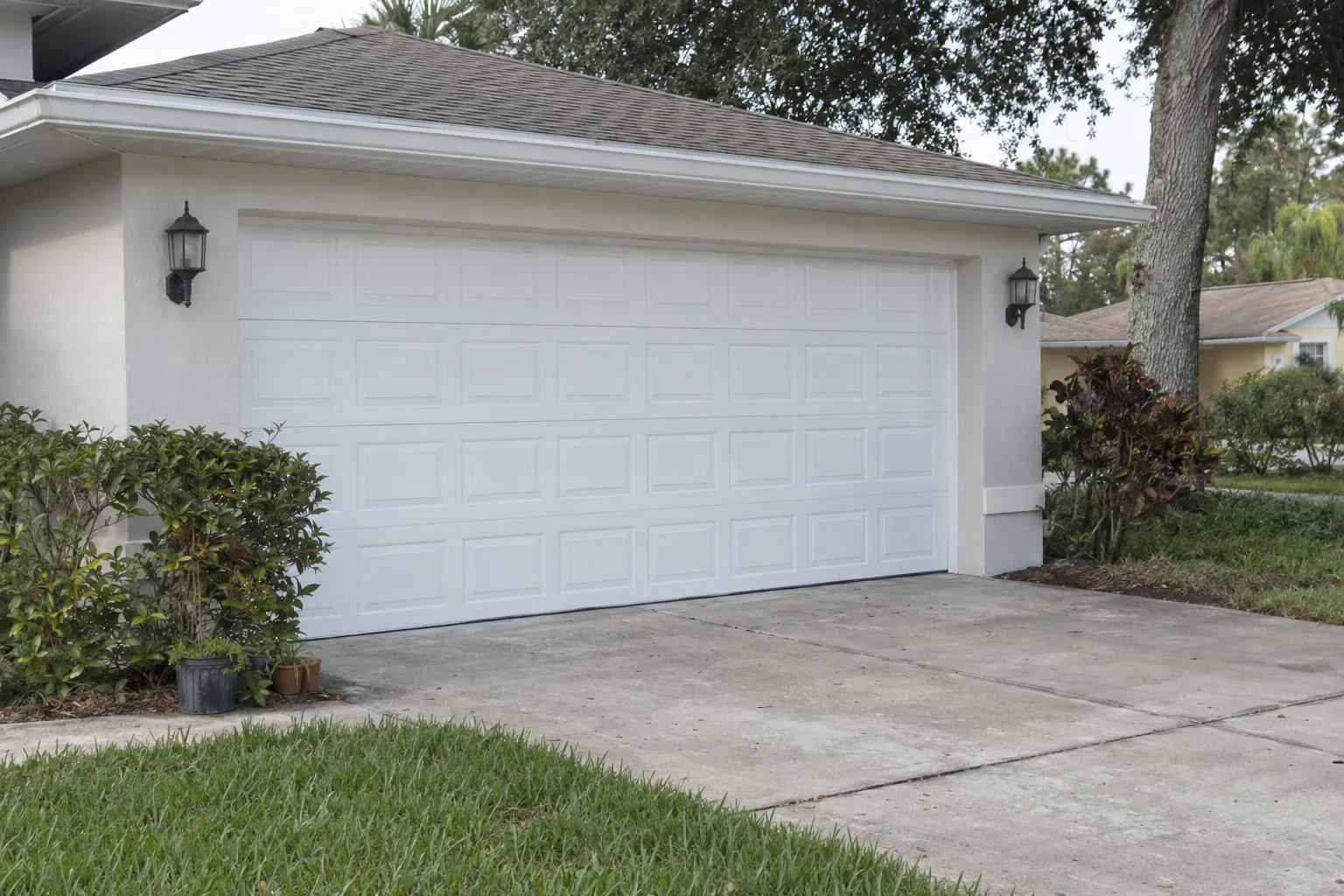
Painting a garage door properly is cleaning, etching, sanding, priming and sealing, and only then colour. Done in that order a finish holds for years here. Skip the prep and the topcoat starts lifting at the panel edges inside one Florida summer.
The door material decides the sequence. Steel needs degreasing and a surface profile for the primer to key into. Wood needs the raised grain dealt with first, or the next coat lifts in the same place it lifted before.
The work covers new colour, full refinishing on faded or chalking doors, and staining on wood, across steel, wood and composite doors.
Four fifths of the hours on a refinishing job happen before any colour goes on.
The surface is degreased and prepped so the primer has something to key into. Chalking residue and road film come off first.
A surface profile is established, damage is addressed, primer goes on and is allowed to cure rather than being top-coated wet.
Panel edges and seams are sealed. That is where moisture gets under a coating and where lifting starts.
A UV rated topcoat applied at the manufacturer's film thickness, in the conditions the product calls for.
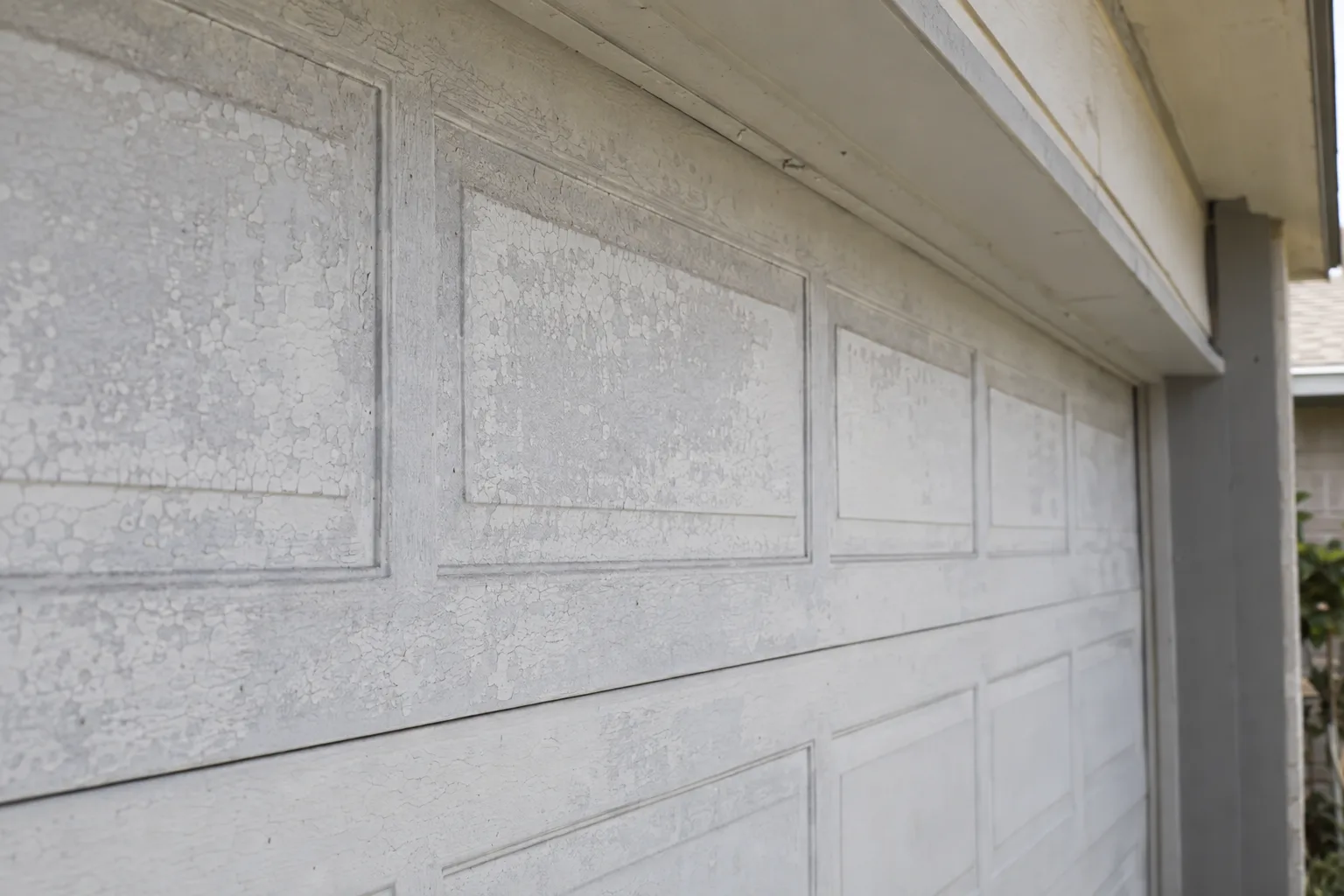
Standard exterior paint is formulated against average national exposure. Central Florida is not average. Properties along Lake Butler Boulevard and the lakefront communities west of SR-535 take direct sun on their street-facing elevations for most of the year, and a door coated with a general-purpose product can be chalking at the top panels within a few years, leaving powder on your hand when you wipe it.
Humidity and storm rain do the rest. Any crack in the finish is a moisture entry point. On steel, water migrates under the topcoat and lifts it at the seams. On wood, it enters the grain and raises it, and the door goes rough and grey within a season or two.
So the products we use are selected for sustained UV and humidity rather than picked off a shelf, with the Florida Building Code performance expectations for exterior products in mind.
Which is why they are prepped differently. The failure pattern tells you what the door needs.
Failure starts at the bottom rail, the section closest to driveway heat and rain splash.
Failure starts at the seams and works under the coating.
If the panels are already denting or cracking, a finish will not fix the door. That is a replacement conversation.
The scope is set on the door in front of us, not on a package name.
Painting runs under the same license as the rest of the work, #93-2002026. You can verify it with the Florida DBPR.
Call (689) 407-8963Windermere, FL 34786
Primary service zone, Orange County. Not sure whether you are inside the radius? Call (689) 407-8963 and ask.
Longer than most people expect if the prep was done and the product is rated for this climate, and only a season or two if it was not. Sustained UV and humidity are what break coatings down here, and edge sealing is what keeps moisture from getting underneath.
Yes. Steel needs degreasing and a surface profile so the primer keys in, plus spot treatment of any rust or bare metal before priming.
Usually. The raised grain has to be sanded back and sealed with a grain sealer before anything else goes on. Skipping that step is why a door fails again in the same spot within a couple of years.
Yes, with grain-sealed prep and a finish system rated for exterior Florida exposure.
If the panels are sound and the hardware works, refinishing is the cheaper answer by a wide margin. If sections are denting or cracking, paint hides the symptom for a season and the door still fails.
Yes. Colour matching to existing trim is normal, and the same finish systems are used on new custom doors we install.
Give us the symptom and a number. We will call you back, usually within the same working day. For a door that will not close, call (689) 407-8963 instead.
Licensed Florida contractor #93-2002026. Serving Windermere 34786 and the west Orlando corridor. 24/7 emergency dispatch.