Four seal positions, matched to your door and your floor, not a one-size strip.
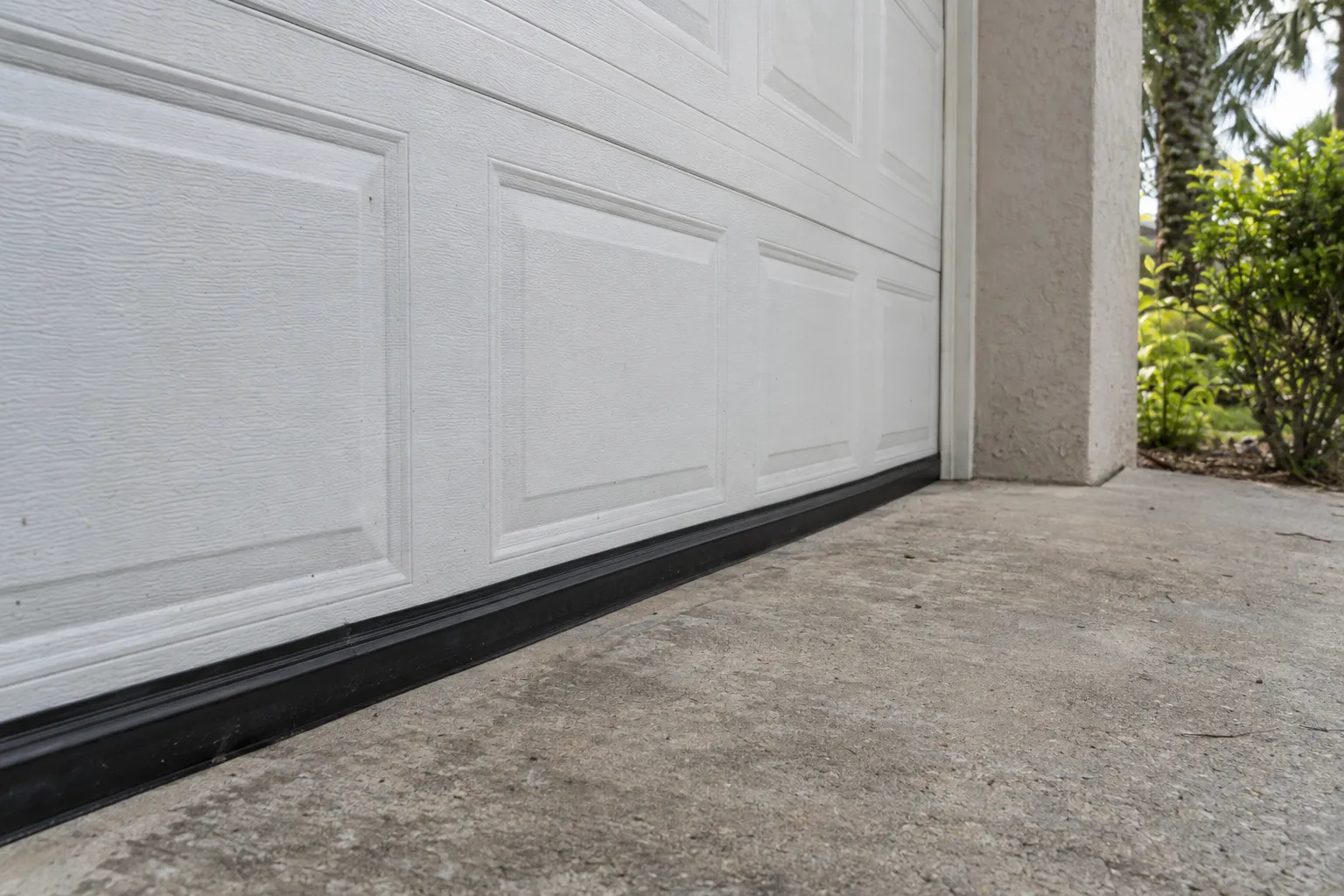
The bottom seal compresses against the slab when the door closes. The perimeter seal wraps the head of the opening. Stop molding runs down each jamb and gives the panel a surface to close against. EPDM rubber goes where exposure is worst, because it resists UV and heat cycling far better than standard rubber.
Most homes here have one or two of these in serviceable condition. Very few have all four at the same time, which is why an afternoon storm still finds a way in even after someone has replaced the bottom strip.
Each fails differently, so each gets inspected rather than assumed. The bottom goes first on Florida slabs, and the perimeter usually goes unnoticed until the light shows through it.
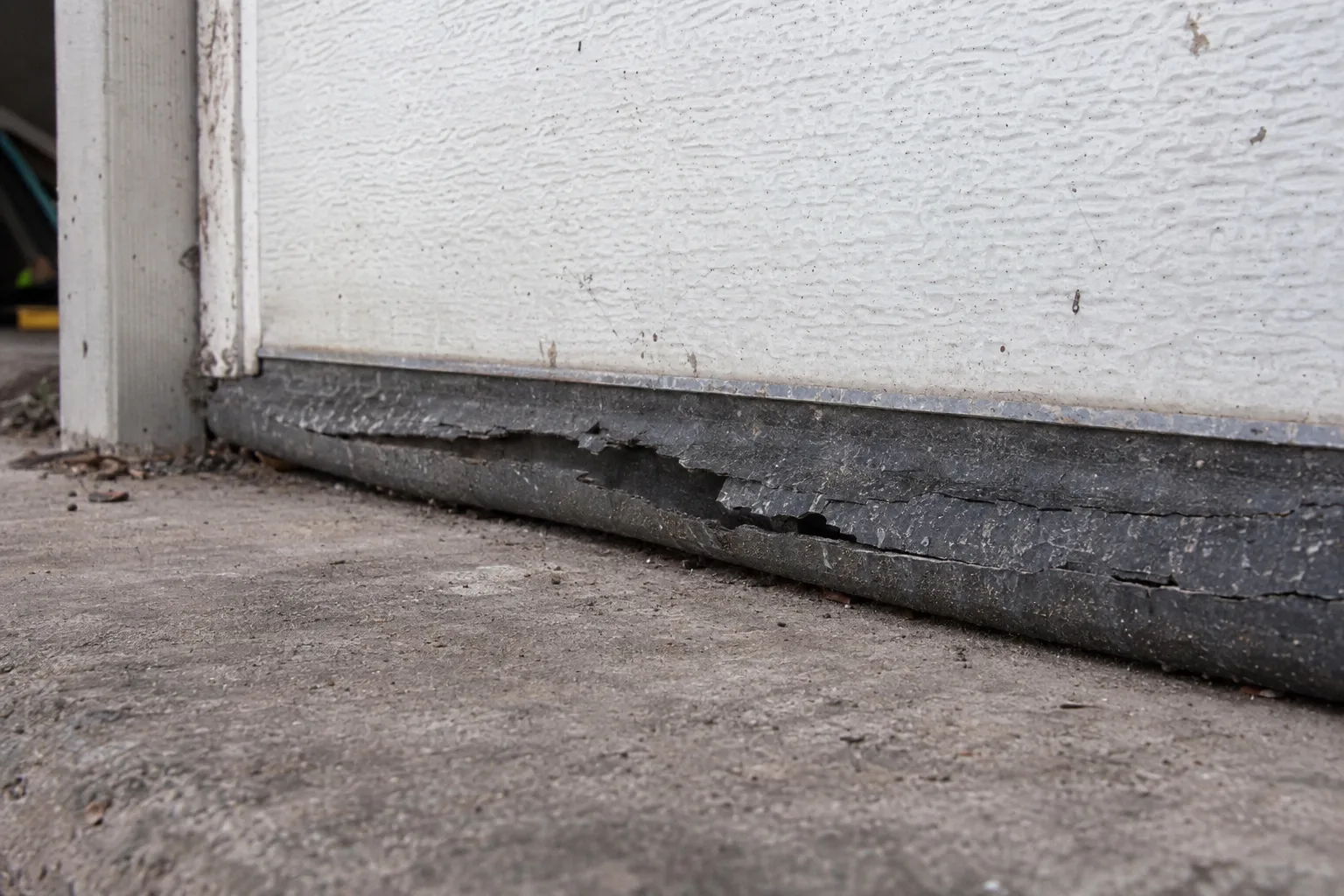
Sustained UV hardens rubber, and hardened rubber stops compressing. Once it stops compressing, the seal is decorative. That happens faster on south and west facing doors, which is why the same door can have a good seal on one elevation and a failed one on another.
Slabs are the other half. Central Florida slabs settle unevenly, so a floor that was flat when the door was installed develops a low spot, and a straight seal cannot close a gap that is not straight. That is a profile choice, not a material choice.
The bottom seal also takes the driveway heat and the rain splash, which is the same combination behind the rest of the wear we see.
The seal that fixes a worn strip does not fix an uneven floor.
The straightforward case, and the common one.
Where a standard strip keeps letting water past.
A threshold seal on the floor solves some low spots and traps water behind it on others. It depends which way the slab falls, which is why we look before recommending it.
All four positions get inspected even when you called about one.
Seals are also part of storm preparation, but a door that seals is not a door rated for wind load, and the two get confused. Wind-load ratings come from the Florida Building Code. See hurricane season prep.
Call (689) 407-8963Windermere, FL 34786
Primary service zone, Orange County. Not sure whether you are inside the radius? Call (689) 407-8963 and ask.
More often than the packaging suggests. Sustained UV hardens rubber until it stops compressing, and south and west facing doors go first.
Usually the floor rather than the seal. A settled slab leaves a low spot that a straight strip cannot close, and the fix is a different profile or a threshold seal depending on which way the slab falls.
A synthetic rubber that resists UV and heat cycling much better than standard rubber. It is worth it where the door takes direct afternoon sun.
They help, but the panel is the bigger factor. Sealing an uninsulated door reduces air exchange, not heat transfer through the door itself. That is what insulation addresses.
Often yes, if the retainer is sound and the floor is level. The cases that go wrong are a bent retainer, a corroded bottom rail, or a low spot in the slab that no strip will bridge.
A properly compressed bottom seal closes the gap most things come through. A hardened one leaves a gap you can see daylight under.
Give us the symptom and a number. We will call you back, usually within the same working day. For a door that will not close, call (689) 407-8963 instead.
Licensed Florida contractor #93-2002026. Serving Windermere 34786 and the west Orlando corridor. 24/7 emergency dispatch.