A door that drifts or strains the opener has a spring tension problem worth fixing.
A balanced door stays exactly where you leave it, with no motor and no hand. The counterbalance system does that work: springs, cables and drums offsetting the weight of the panel.
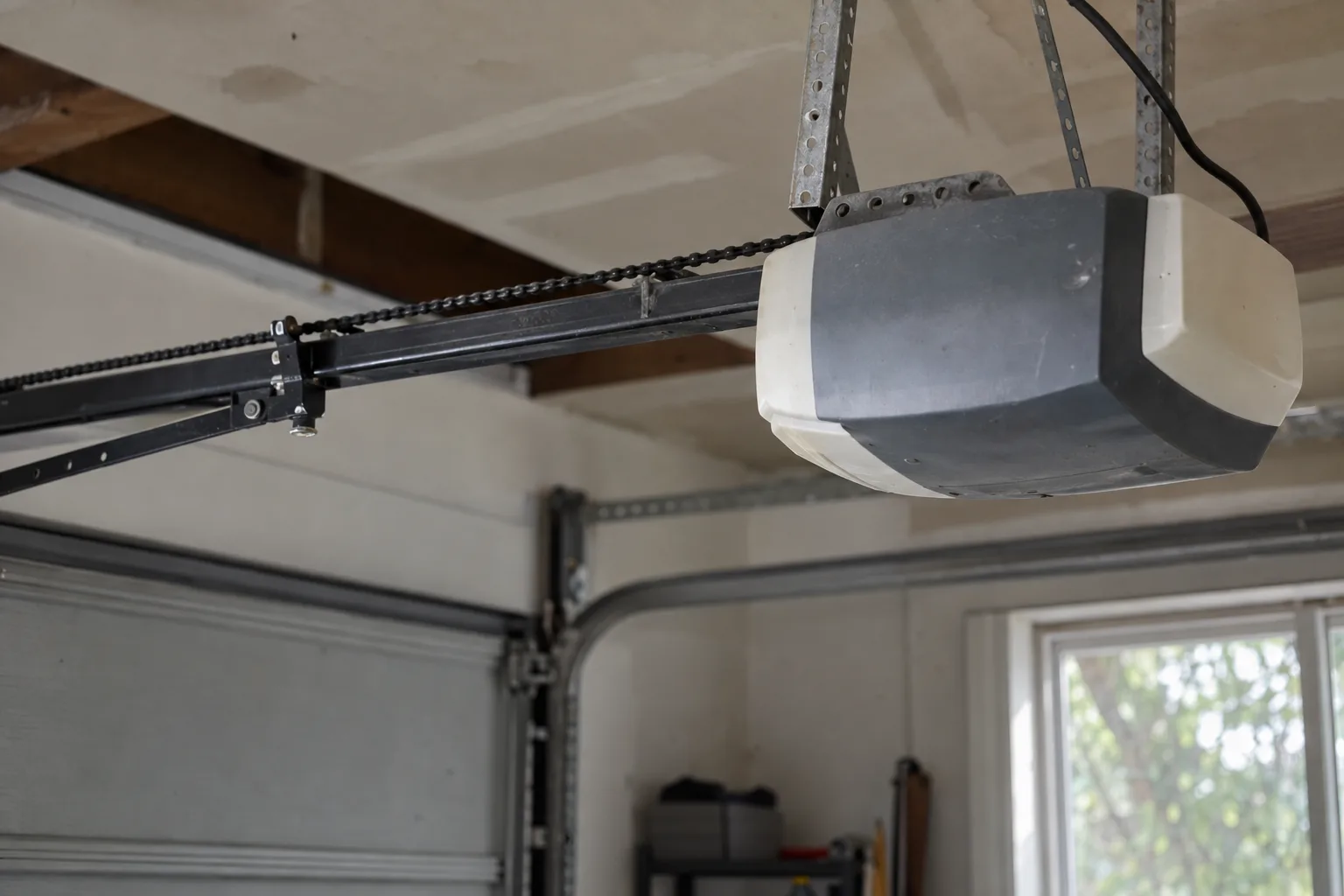
When the tension drifts out of spec, the opener quietly makes up the difference on every cycle. Not dramatically, just enough. An opener has a force limit it was designed to work inside, and a door slightly out of balance pushes past it every time it runs.
Months of that is real wear on a part that costs far more than a spring adjustment. Where the springs themselves are the problem, spring repair is what brings it back into spec. Balance testing follows the counterbalance testing protocol published by DASMA, the industry standards body.
Measured and adjusted, not eyeballed.
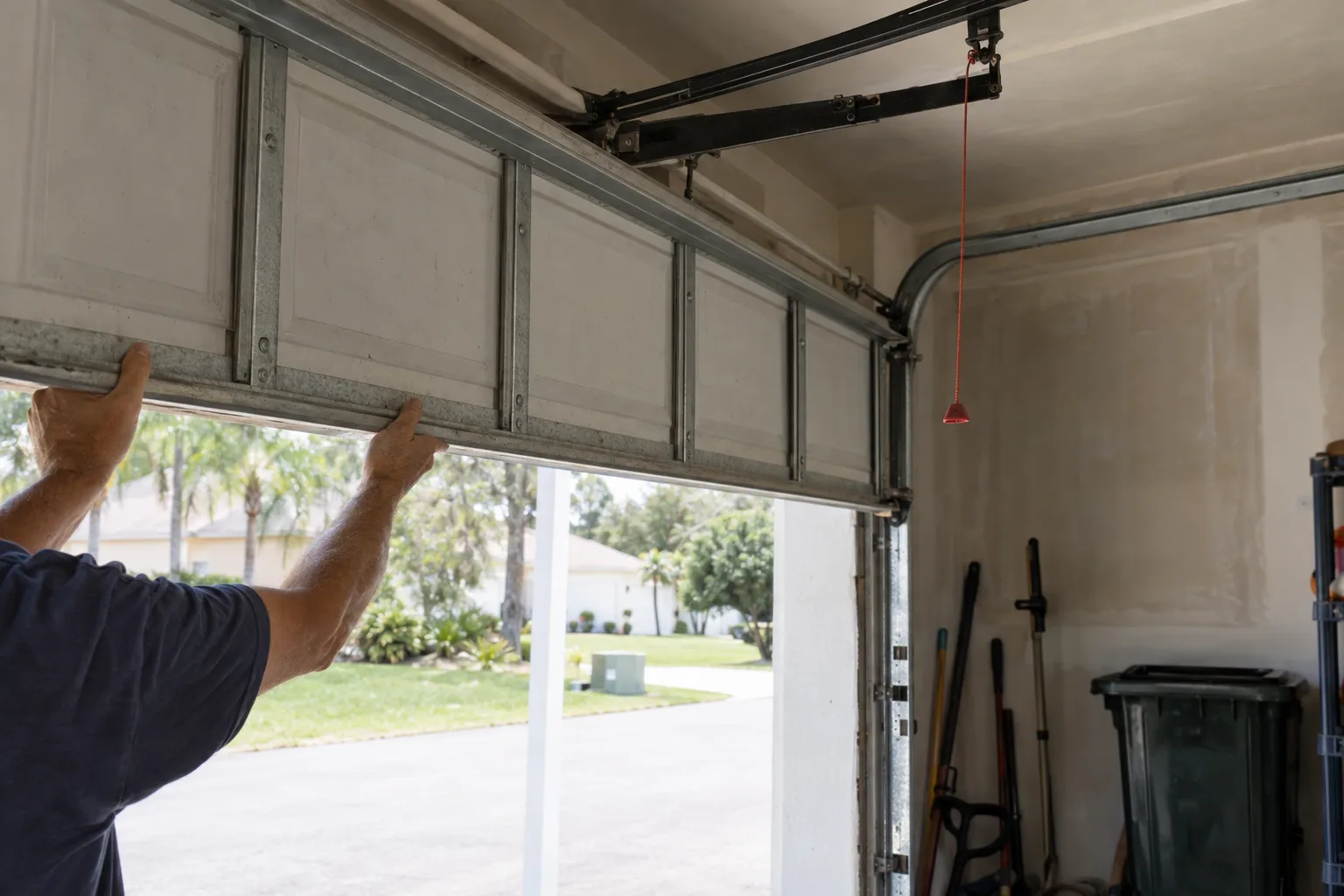
The trolley is released and the door raised to mid travel by hand, then let go. A balanced door holds. An unbalanced one tells us which way the tension is off.
Torsion tension is set in quarter-turn increments against the door's actual panel weight, with a test after each adjustment rather than at the end.
The door has to hold at the lower third, mid height and upper third. A door that holds at the middle and drops near the floor is still out of spec.
Force and travel limits are reset to the corrected door, so the opener stops compensating, and the safety reversal is retested.
The opener is the first casualty. Gear sets strip early on doors that were never balanced, and that failure looks like an opener problem when it is a spring problem.
Cables are next. A door pulling unevenly loads one drum harder than the other, which is how a cable frays on one side while the other looks new, and how a door ends up off its track.
Then there is the safety case. An unbalanced door is heavier than the opener's force setting assumes, and a door that will not hold its own weight is the one that falls if a cable lets go. That is why balance is part of every tune-up and maintenance visit rather than an add-on.
Tension is the adjustment. These are the things that make the adjustment hold.
If the springs are at end of life, tension adjustment buys weeks. We will say so rather than adjust a spring that needs replacing.
Call (689) 407-8963Windermere, FL 34786
Primary service zone, Orange County. Not sure whether you are inside the radius? Call (689) 407-8963 and ask.
Close the door, pull the manual release, lift it to about halfway by hand and let go. It should stay put. If it drops or rises on its own, the counterbalance is out.
Not always. Binding from a dry or scored track, a seized roller or a dragging hinge feels like weight. That is why the door gets hand tested through its full travel rather than just weighed at one point.
Both happen. A spring with life left can be re-tensioned. One near the end of its cycle life cannot hold an adjustment, and re-tensioning it just moves the failure a few weeks.
Tension is not linear across the travel. A door can hold at mid height and still drop in the lower third, which is why it gets tested at three points.
It stops the opener carrying weight it was never meant to carry, which is the most common reason gear sets strip early.
Yes, balance is checked on every tune-up. A standalone balancing call is for when the door is already drifting or straining.
Give us the symptom and a number. We will call you back, usually within the same working day. For a door that will not close, call (689) 407-8963 instead.
Licensed Florida contractor #93-2002026. Serving Windermere 34786 and the west Orlando corridor. 24/7 emergency dispatch.