Installed, paired to the app and working before we leave. Not a box and an instruction sheet.
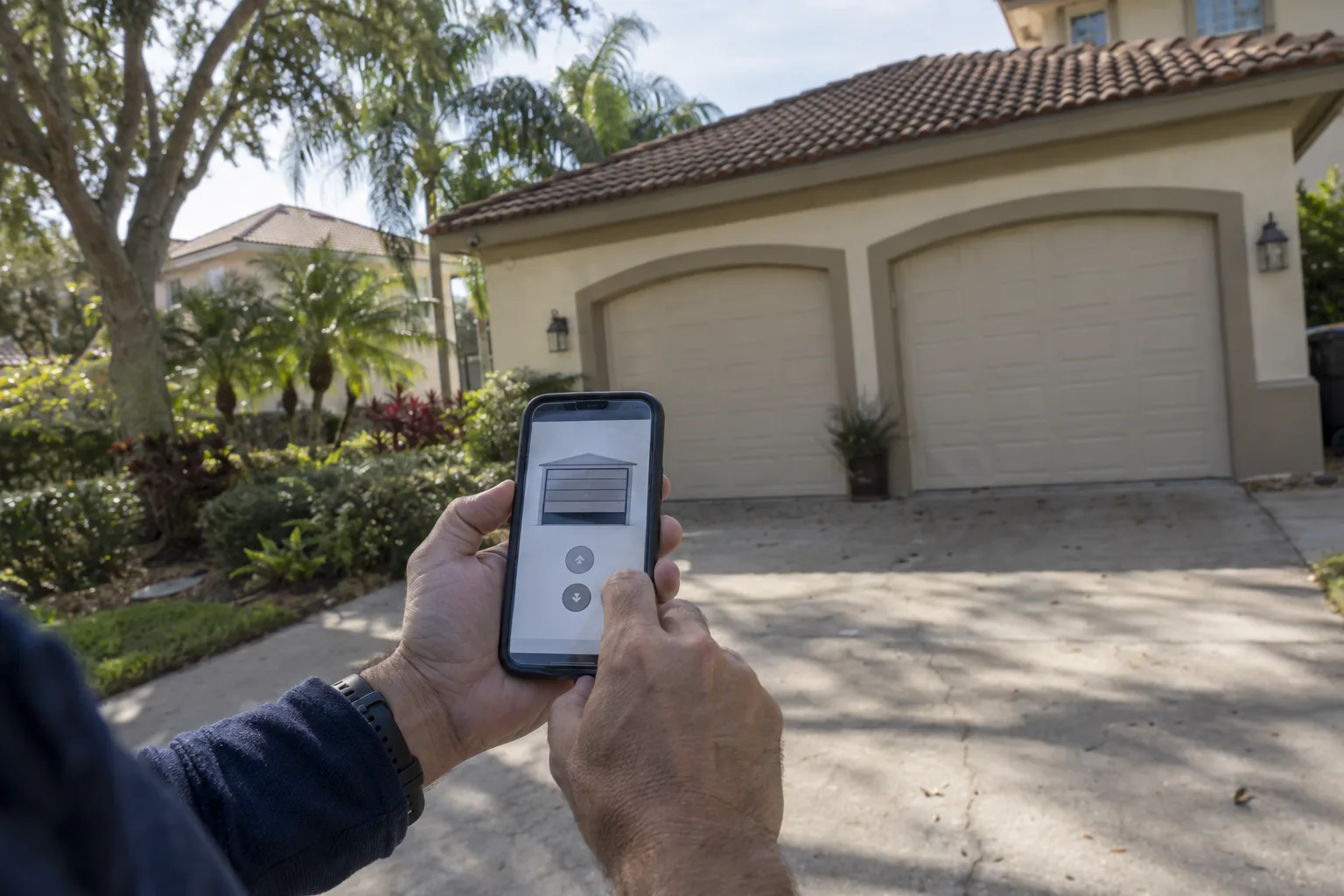
A smart opener does three things a standard one cannot: it monitors, it logs and it responds remotely. You see every open and close event with a timestamp, you can trigger the door from anywhere, and an auto-close timer means a forgotten open does not stay open.
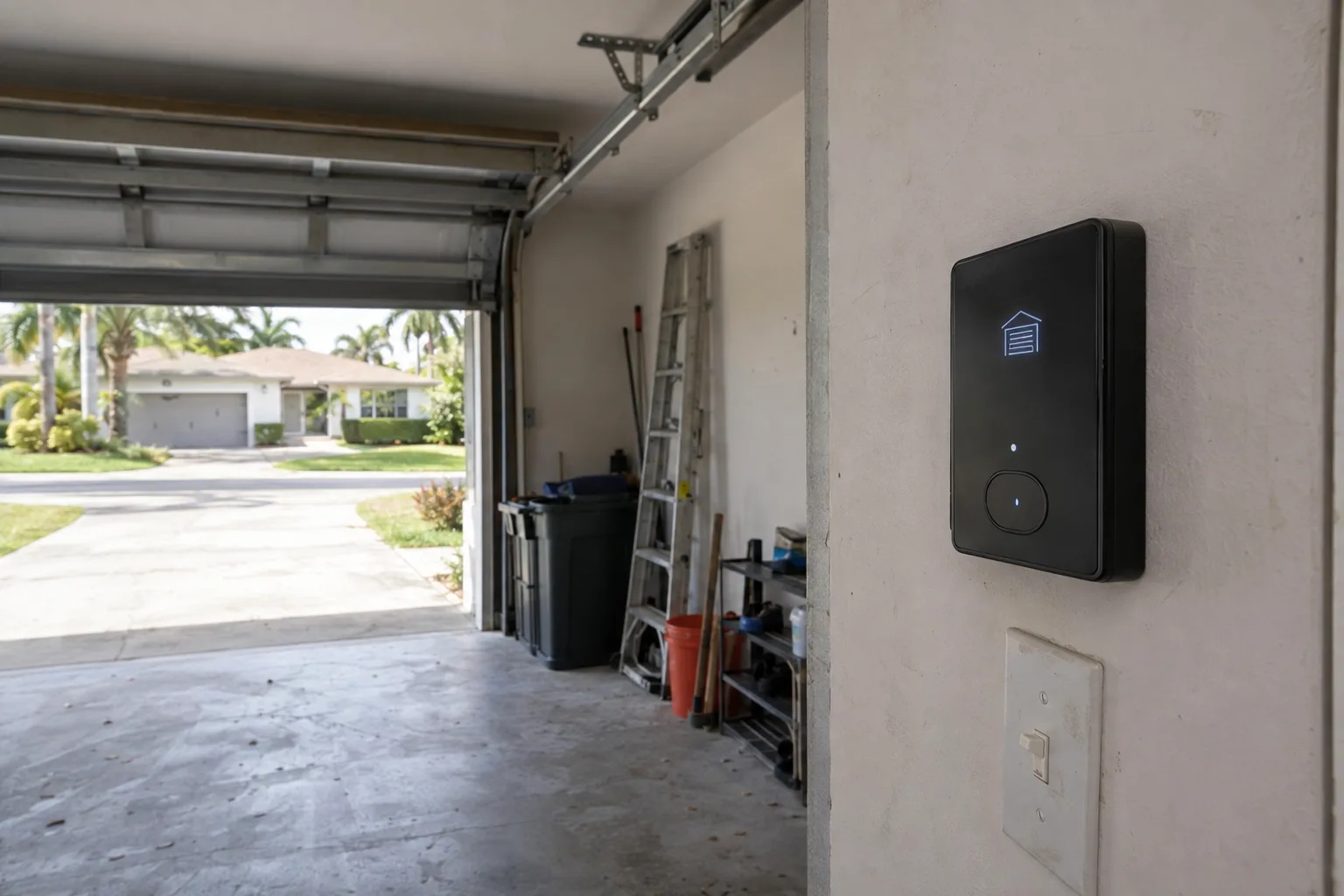
For that to work you need the opener, a network signal that actually reaches the ceiling of the garage, and the app paired to both. The middle one is where installs fail here. Large lots and detached garages mean the opener can sit a long way from the router, and a module that shows two bars on install day drops out in August.
So the signal gets measured at the opener location before hardware is confirmed. If it is marginal, we say so and talk about an access point rather than selling a module that will frustrate you. The rest is standard garage door opener installation in Windermere.
Around the Butler Chain of Lakes and the Phillips Road corridor a lot of homes host short-term guests, rotating family access and contractors. A standard opener gives you no feedback at all: you cannot tell whether the door was left open, or when, or by whom.
A timestamped activity log answers that, and remote control means you do not have to drive back to find out. The auto-close timer covers the ordinary case, which is someone leaving it open without noticing.
The same considerations apply in Winter Garden, Maitland and Bay Hill, where the lots are large enough that the signal question comes up on almost every install.
The decision starts with what is already in the ceiling, not with a spec sheet.
Newer LiftMaster units with Security+ 2.0 generally accept smart integration directly. Older units and some other brands need a replacement opener rather than a bridge, and we say which before quoting.
Measured at the actual mounting position, not at the garage door. Heat and moisture at ceiling level also affect where the module should sit.
Checked before anything is connected. Remote control of a door that is not balanced just means you can watch it struggle from further away.
Account, network pairing, notifications and the auto-close timer configured and tested on site, with the safety reversal retested afterwards.
The install is not finished until the app does what it is supposed to.
Third party smart home ecosystems change their integrations from time to time. We set up what works on the day and say plainly what is outside our control. The install itself runs under one license, and you can verify it with the Florida DBPR.
Call (689) 407-8963Windermere, FL 34786
Primary service zone, Orange County. Not sure whether you are inside the radius? Call (689) 407-8963 and ask.
Sometimes. Newer LiftMaster units with Security+ 2.0 usually accept smart integration. Older units and several other brands do not, and a bridge sold as universal often is not. We check the unit before recommending anything.
It happens often on large lots and detached garages. We measure at the opener before confirming hardware. The fix is usually an access point or a mesh node rather than a different opener.
Shows you whether the door is open or closed, logs every event with a time, lets you open and close remotely, and closes the door automatically after an interval you set.
The opener uses a rolling code between the remote and the unit, and the app account is yours. Use a password you do not reuse, and remove access for anyone who no longer needs it.
Yes, that is the common use. You can see the door open and confirm it closed afterwards, which is the part a keypad code alone does not give you.
The opener does not run without power, and the app cannot reach it. That is what the manual release cord is for, and we show you how to use it before we leave.
Give us the symptom and a number. We will call you back, usually within the same working day. For a door that will not close, call (689) 407-8963 instead.
Licensed Florida contractor #93-2002026. Serving Windermere 34786 and the west Orlando corridor. 24/7 emergency dispatch.