Springs, cables, rollers, hinges, balance, sensors and seals, in one scheduled visit.
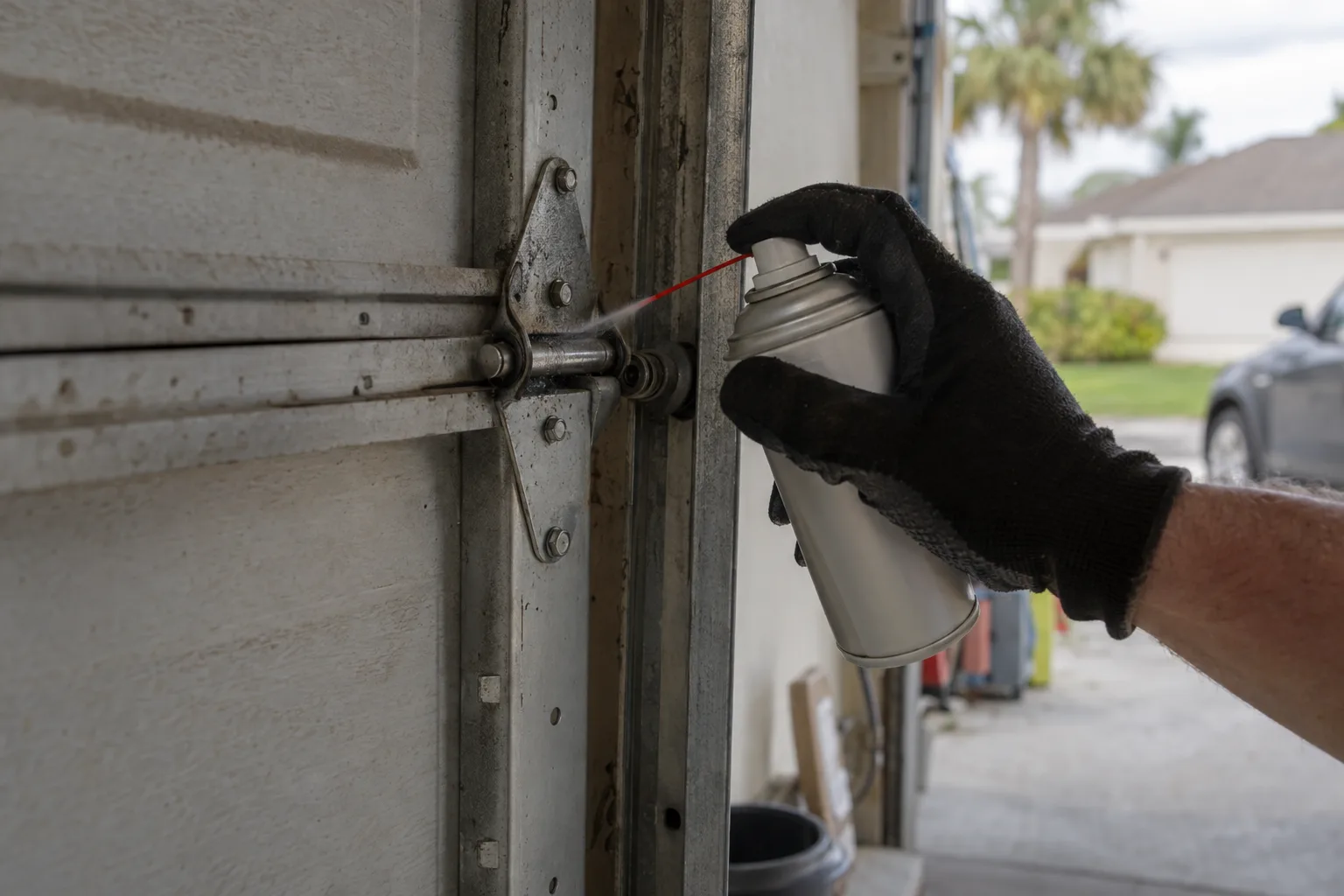
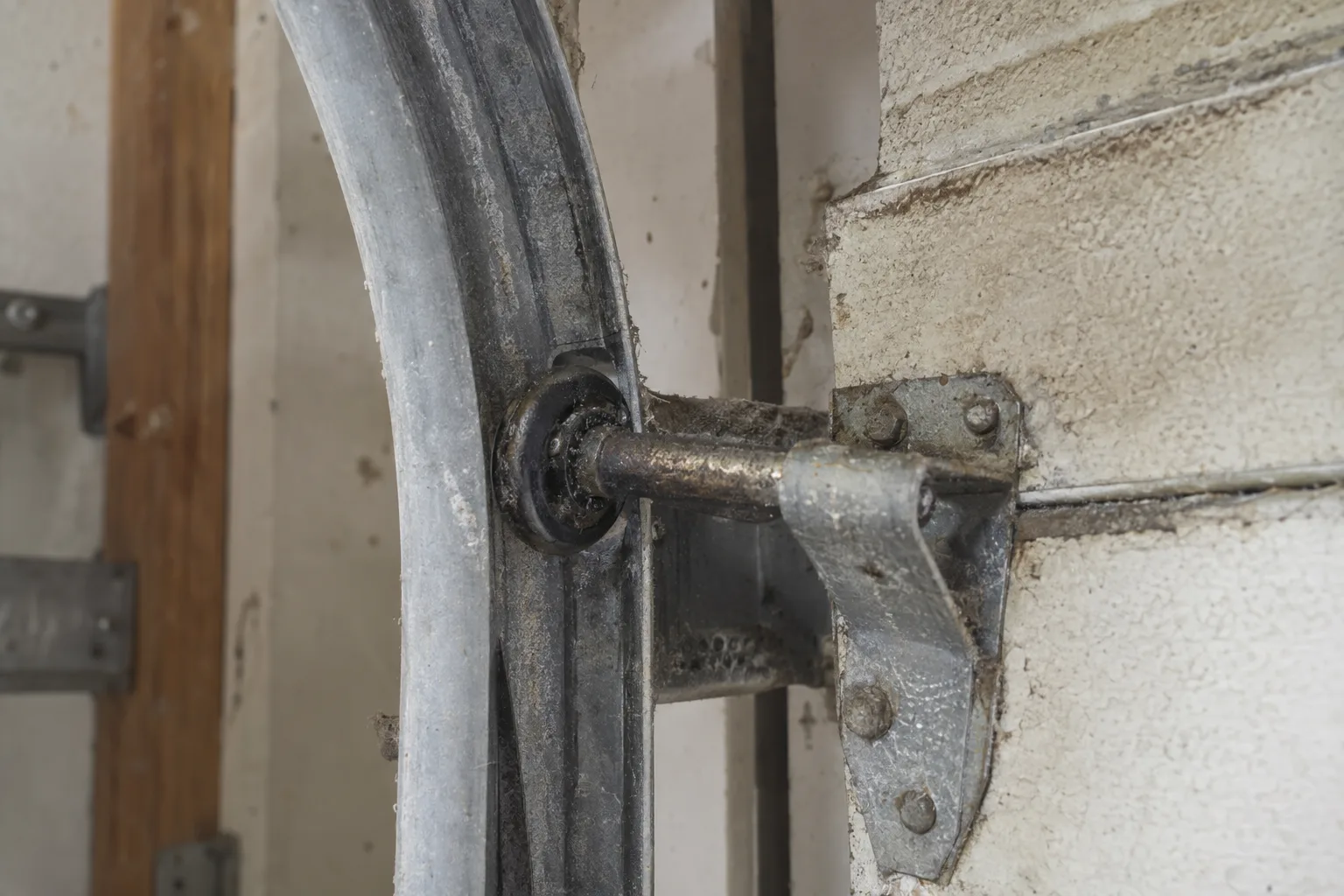
Lubrication points are specific: torsion spring coils, roller bearings, hinge pivots and the track curve. Everything else gets inspected and adjusted rather than sprayed, and the track itself is cleaned rather than lubricated, because oil in a track collects grit.
The visit covers the full system in one appointment: spring tension, cable and drum condition, roller and hinge wear, hardware torque, track alignment, balance, safety sensors and the weather seals.
Every finding gets explained before the job is closed. You should know what was inspected, what was adjusted and what to watch for, which is the difference between maintenance and an oil-and-go visit.
Central Florida spends much of the year above ninety degrees, and that heat pulls lubricant off metal faster than a national maintenance template assumes. Annual service that holds up in a temperate climate does not hold up the same way here.
Humidity compounds it. Moisture reaches every fastener, bracket and cable strand, and hardware torque loosens under vibration and thermal cycling together. By the time a door starts grinding it has been working harder than it should for a while. The mechanism is the same one described in heat and humidity damage.
So the schedule we recommend reflects local conditions rather than a manufacturer's average, and for doors that cycle six to ten times a day it is shorter still.
Same sequence every time, starting at the part carrying the most load.
Tension checked against the door's weight, coils inspected for corrosion and gaps, and the shaft and bearings checked for play.
Fraying, drum seating and even winding on both sides, the failure that most often takes a door off its track.
Every roller spun by hand for catch and play, every hinge position checked for elongation and cracking.
Alignment and gauge checked, track cleaned, and every bracket and fastener retorqued.
Opener disconnected, door lifted to mid travel by hand and released. It should hold position.
Photo eyes aligned and reversal tested, and the bottom and perimeter seals checked for hardening and gaps.
Worth saying plainly, because maintenance gets sold as a fix for things it cannot fix.
Where a tune-up finds one of these, you get told what it is and what it costs, and nothing is replaced without you agreeing to it. Service intervals and component specifications follow DASMA, the industry standards body, and you can verify it with the Florida DBPR.
Call (689) 407-8963Windermere, FL 34786
Primary service zone, Orange County. Not sure whether you are inside the radius? Call (689) 407-8963 and ask.
More often than a national guideline suggests, because the heat pulls lubricant off metal and the humidity works on every fastener. A door used as the family's main entrance needs it sooner than one used twice a week.
The full system in one visit: spring tension, cables and drums, rollers, hinges, hardware torque, track alignment, balance, safety sensors and the seals.
Usually yes, if the noise is dry pivots or loose hardware. If it is a seized roller or a scored track, the tune-up will identify it but the fix is a repair.
Yes. Commercial doors cycle far more than residential ones, and scheduled service contracts are available instead of reactive calls.
They overlap but they are not the same. A safety inspection documents the condition and the safety systems formally, which is what a landlord or a sale sometimes needs.
Yes, that is most of the work. Inherited doors with no service history are the normal case in this area.
Give us the symptom and a number. We will call you back, usually within the same working day. For a door that will not close, call (689) 407-8963 instead.
Licensed Florida contractor #93-2002026. Serving Windermere 34786 and the west Orlando corridor. 24/7 emergency dispatch.